
Tag: content systems

  • The Creator Content Audit

    The Creator Content Audit

    Creator Compass Logo

    The Creator Content Audit

    Most creators spend their time thinking about the next piece of content they want to publish.

    But experienced creators know something important.

    Sometimes the best way to improve your content isn’t by creating more of it.

    A content audit is simply the process of stepping back and evaluating your existing work. Instead of guessing what might work next, you study the patterns that already exist in your content.

    For creators who want to grow intentionally, content audits are one of the most valuable habits they can develop.


    Every piece of content you publish contains signals.

    Some posts attract readers.
    Some topics generate conversation.
    Some formats simply feel more useful than others.

    A content audit helps reveal what your work is already telling you.


    The first step is simply listing your existing work.

    This might include:

    • blog posts
    • videos
    • tutorials
    • guides
    • social content

    Creators then frequently discover that they have unintentionally built themes or knowledge areas.


    Next, examine which pieces appear to perform best.

    This does not always mean the most popular content.

    Sometimes…

    The most valuable content is the material that solves the clearest problem for your audience.

    Look for signals such as:

    • higher engagement
    • longer reading time
    • recurring questions from readers
    • posts that inspire follow-up ideas

    These pieces often represent the true strengths of your content direction.


    You may notice posts that:

    • could be expanded
    • deserve updates
    • need clearer structure
    • could connect with other related content

    The most valuable part of a content audit is identifying patterns.

    Questions worth asking include:

    1. What topics appear repeatedly?
    2. Which formats resonate most with readers?
    3. What ideas deserve deeper exploration?

    Once patterns become clear, creators can then focus on building more great content around their strongest themes.


    By reviewing existing work, creators gain insight into what truly matters within their content ecosystem.

    And when those insights guide future decisions, every new piece of content becomes more intentional.


    🧭

    This guide is part of the Creator Compass system, a collection of resources designed to help creators build stronger content direction.

  • The Simple Content Map Every Creator Should Build

    The Simple Content Map Every Creator Should Build

    Creator Compass Logo

    But over time, something unexpected happens.

    The Simple Content Map Every Creator Should Build

    Content begins to feel scattered.

    Ideas exist everywhere – in notebooks, draft folders, unfinished posts…

    Yet turning those ideas into a clear body of work can often become difficult.

    What many creators lack is not creativity.

    What they lack is a content map.

    A content map provides a simple structure that helps creators transform ideas into meaningful, connected content.

    Without a map, content creation often becomes reactive.

    Creators publish whatever idea feels interesting in the moment.

    While this approach can work for a while, it eventually leads to a disconnected collection of posts that feel totally unrelated.


    Instead of asking “What should I create next?”

    Creators begin asking:

    🧭

    “Where does this idea fit within my map?”


    A useful content map often contains four simple layers.

    • Ideas
    • Content pieces
    • Experiments
    • Reflection

    Each layer plays a role in helping creators turn inspiration into improvement.

    Every creator generates more ideas than they can realistically publish.

    A content map begins by capturing these ideas in one place.

    Ideas can include article concepts, video topics, tutorials, frameworks, or experiments.

    The goal is not perfection it is simply capturing the creative spark before it disappears.

    The next step involves transforming selected ideas into actual content.

    These pieces form the visible body of work that audiences encounter.

    Over time, these pieces begin connecting to each other, forming themes and clusters that help audiences explore deeper into the creator’s knowledge.

    Not every idea will succeed.

    Experiments allow creators to test different topics, formats, and approaches without expecting perfection.

    Some experiments will resonate strongly. Others will quietly fade away.

    The final layer — and the one most creators overlook — is reflection.

    • Which topics generated interest?
    • Which posts solved meaningful problems?
    • Which ideas deserve further exploration?

    Reflection transforms isolated pieces of content into lessons that guide future creation.

    A content map does not need to be complicated

    As more content appears within the map, connections become clearer.

    Creators who use content maps often discover that their work becomes easier to manage and more meaningful to their audience.

    And over time,

    Their content evolves into a connected ecosystem that continues to grow.


    🧭

    This guide is part of the Creator Compass system, a collection of resources designed to help creators build stronger content direction.

  • The First System Every Content Creator Should Build…

    The First System Every Content Creator Should Build…

    The First Content System Every Content Creator Should Build

    It begins with a system.

    A system doesn’t create ideas.

    It creates structure around how ideas are developed.

    • thinking
    • publishing
    • reflection

    Without reflection, creators repeat the same experiments without learning from them.

    Reflection allows creators to notice patterns such as:

    • the topics that resonate
    • the themes that repeat
    • and the ideas that deserve deeper exploration

    When those patterns become visible, content creation becomes easier.

    Creators can then stop guessing.

    A beginner creator system can be extremely simple:

    Publish → Analyze → Reflect.

    And over time, those insights compound.

    Conclusion

    Creators don’t need complex productivity stacks.

    They need a simple loop that helps them learn from their own work.

    That loop is where clarity begins.

    READ THESE BLOG POSTS:

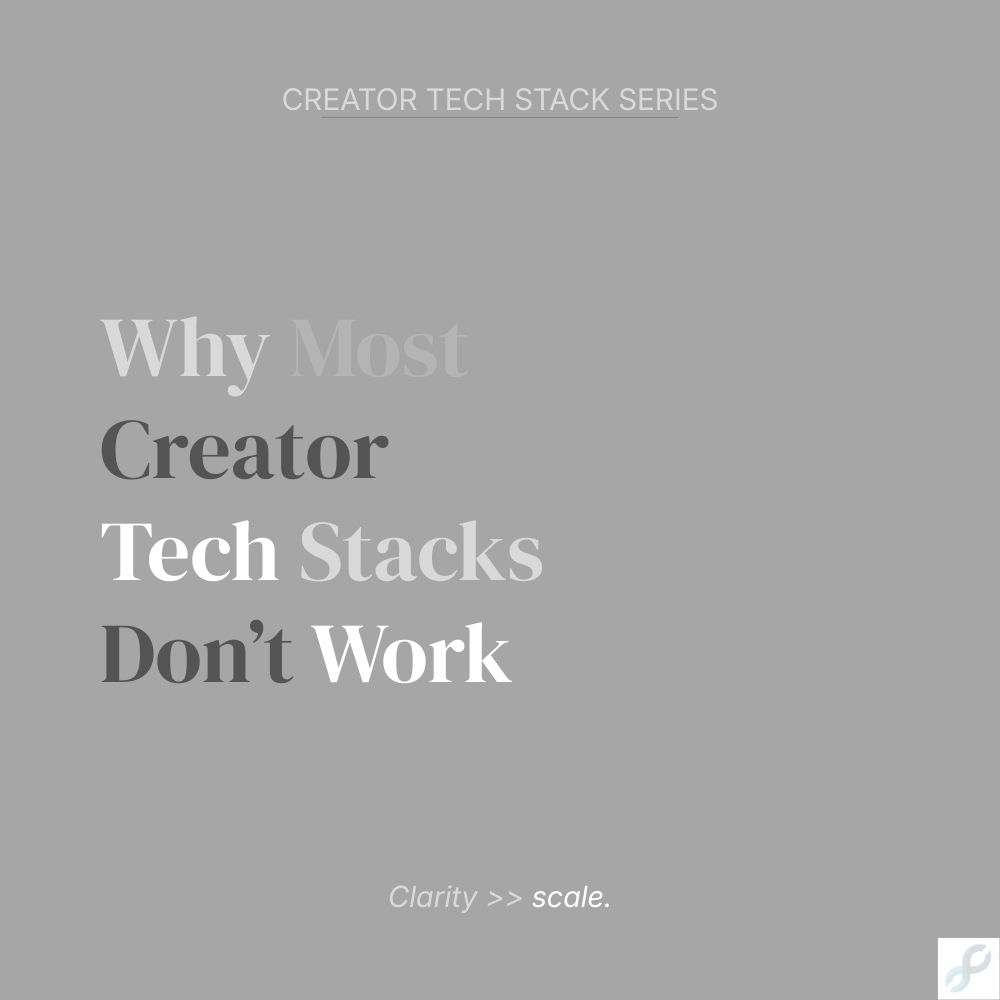
  • Why Most Creator Tech Stacks Don’t Work

    Why Most Creator Tech Stacks Don’t Work

    Many creators believe their tech stack is the key to productivity.

    Why Most Creator Tech Stacks Don’t Work

    They collect writing tools, design apps, automation platforms, and analytics dashboards.

    But over time, the stack becomes heavier rather than more helpful.

    The problem usually is not the tools.

    It’s the order they were adopted.

    The Common Stack Problem

    Most creators build their stack in reverse.

    They start with:

    • marketing tools
    • automation tools
    • distribution platforms

    But skip the foundational layer: clarity.

    Without understanding what their work is actually about, tools simply amplify all the confusion.

    Why Tools Alone Don’t Create Systems

    A real system answers three questions:

    • What am I trying to say?
    • Who is this for?
    • What pattern exists in my work?

    When those answers are missing, creators keep experimenting with new tools instead of improving their thinking infrastructure.

    The Layer Most Creators Skip

    The first layer of a creator stack should always be thinking infrastructure.

    Before optimizing marketing, creators benefit from understanding the patterns in their own content.

    That’s why tools like Postilytic focus on analyzing published work rather than producing new ideas.

    Clarity first. Scale later.

    Conclusion

    A real creator tech stack is built from the foundation upward:

    Thinking → Direction → Publishing → Visibility.

    When that order is respected, tools stop competing for attention and begin supporting momentum.

  • How to Build a Content Creation Workflow That Actually Works

    How to Build a Content Creation Workflow That Actually Works

    BLOG How to Build a Content Creation Workflow That Actually Works

    Most creators assume their biggest challenge is coming up with ideas.

    But the real problem usually appears later.

    Ideas exist.
    Posts get written.
    Content gets published.

    Yet over time the process begins to feel scattered.

    Creators start asking questions like:

    • What should I write next?
    • Why do some posts work while others disappear?
    • Am I building momentum or just publishing randomly?

    This is where most creators realize something important.

    The problem isn’t ideas.

    It’s the workflow.

    A sustainable creator workflow isn’t just about producing more content.

    It’s about building a system that helps your thinking evolve over time.

    A content creation workflow is the process creators use to plan, produce, publish, and improve their content over time.

    A simple workflow helps creators stay consistent, reduce overwhelm, and build better content with each iteration.

    They organize systems like this:

    Idea → Write → Publish → Promote.

    At first this feels productive.

    But over time a problem appears.

    Posts are written quickly, promoted briefly, and then forgotten.

    Without reflection or analysis, creators end up repeating the same cycle without learning from their work.

    The workflow becomes busy, but not directional.


    Creators who build long-term momentum tend to follow a slightly different process.

    Their workflow includes five stages.

    Not just publishing.

    But learning.


    Ideas appear everywhere.

    In conversations.

    During research.

    While writing other posts.

    Instead of forcing every idea into immediate content, experienced creators maintain a simple capture system.

    This might include:

    • note apps
    • idea lists
    • content journals

    The goal isn’t perfection.

    It’s preservation.

    Ideas stay available until they are ready to develop.


    This is the step most creators skip.

    Before choosing the next topic, successful creators pause to look at the work they’ve already published.

    Patterns often appear.

    Certain ideas show up repeatedly.
    Some themes attract stronger engagement.
    Other topics feel more natural to write about.

    Understanding these patterns transforms content creation from guessing into direction.

    Instead of chasing new topics endlessly, creators can build from what is already working.


    Once patterns become visible, direction begins to emerge.

    Creators can start asking better questions:

    • Which ideas appear consistently in my writing?
    • What topics naturally lead to deeper exploration?
    • Which themes connect multiple posts together?

    This stage turns scattered ideas into an evolving body of work.

    Content begins to support a larger narrative instead of existing as isolated posts.


    Publishing systems still matter.

    But when direction is clear, publishing becomes easier.

    Instead of forcing new ideas, creators expand existing ones.

    Posts begin linking to each other.

    Topics evolve naturally.

    Consistency appears not because of strict schedules, but because the system now supports momentum.


    The final stage is reflection.

    After publishing, creators return to their work and ask simple questions:

    • What patterns are appearing?
    • What surprised me in this post?
    • What themes are growing stronger over time?

    Reflection closes the loop.

    Each piece of content becomes part of a larger learning cycle.


    When these stages work together, a simple loop emerges.

    Then the cycle begins again.

    Each loop adds clarity.

    Each piece of content becomes easier to build.

    And the creator gradually moves from random publishing to intentional creation.


    Instead of focusing only on output, the workflow helps creators understand their own work.

    Clarity appears gradually.

    Patterns become visible.

    Direction emerges naturally.

    When creators understand their content deeply, publishing tools become far more powerful.

    Distribution becomes easier.

    Growth becomes sustainable.


    If your content system feels scattered, the solution usually isn’t producing more posts.

    It’s stepping back and examining what already exists.

    Patterns often appear long before we notice them.

    By analyzing your existing work, you begin seeing the ideas that deserve to grow.

    From there, a workflow emerges.

    One that supports thinking, publishing, and long-term momentum.

    Clarity first.

    Scale later.


    Creator Compass Logo

    This workflow is part of the Creator Compass system.

  • What a Real Creator Tech Stack Looks Like

    What a Real Creator Tech Stack Looks Like

    What a Real Creator Tech Stack Looks Like

    A design app.

    A writing app.

    An email platform.

    A scheduling tool…

    Over time, the list grows.

    New platforms appear.

    New workflows emerge.

    And before long, the “stack” feels complicated rather than helpful.

    But a real creator tech stack isn’t about tools.

    It’s about infrastructure.

    Serious creators build systems that support how they think, decide, publish, and grow.

    When those layers are aligned, tools stop feeling chaotic and start supporting momentum.

    Before marketing, publishing, or monetizing, creators need clarity.

    Most content problems aren’t caused by a lack of effort.

    They are caused by a lack of context.

    Creators publish regularly but struggle to see patterns in what they’ve already made.

    Ideas accumulate, posts multiply, and decisions become reactive rather than intentional.

    Thinking infrastructure solves that.

    This layer helps creators:

    • analyze existing content
    • capture insight from past work
    • recognize patterns in their thinking

    Tools like Postilytic sit in this layer.

    Instead of producing more content immediately, creators step back and examine what they’ve already published. Structured analysis creates snapshots of insight that compound over time.

    When creators can see their patterns, they make better decisions about what to create next.

    Clarity begins here.

    Once patterns appear, the next layer becomes possible: direction.

    This layer transforms insight into intentional decisions.

    Creators begin to ask questions such as:

    • Which ideas consistently perform well?
    • Which topics feel aligned long-term?
    • Which projects deserve deeper focus?

    Direction infrastructure provides frameworks for answering those questions.

    Instead of drifting between ideas, creators begin to move forward with purpose.

    Offers become clearer.
    Content themes become stronger.
    Creative energy becomes more focused.

    Without this layer, creators often keep producing content without understanding why some work resonates while other pieces disappear quietly.

    Direction turns insight into strategy.

    Once clarity and direction exist, publishing becomes far more effective.

    This layer includes the platforms and systems that distribute creative work:

    • blogging platforms such as WordPress
    • content workflows
    • scheduling systems
    • visual publishing strategies

    Publishing infrastructure allows creators to move consistently without starting from scratch each time.

    Instead of improvising every week, creators build repeatable workflows that support momentum.

    Structure removes friction.

    And when friction decreases, consistency becomes easier to maintain.

    The final layer is visibility.

    This is where traffic systems live:

    • Pinterest discovery
    • search engines
    • YouTube or video platforms
    • audience growth channels

    Many creators try to start here.

    But visibility without clarity often amplifies confusion.

    Traffic arrives, yet the underlying message remains unfocused.

    When visibility sits on top of strong thinking, direction, and publishing infrastructure, something different happens.

    Traffic amplifies clarity instead of chaos.

    Growth becomes sustainable.

    The most common mistake creators make is building their stack in reverse.

    They begin with visibility tools and marketing systems.

    But without clarity underneath, the stack becomes heavy and difficult to manage.

    The result looks something like this:

    More tools.
    More dashboards.
    More effort.

    But not necessarily more direction.

    When creators rebuild their stack from the foundation upward, the entire system changes.

    Clarity informs direction.

    Direction guides publishing.

    Publishing supports visibility.

    The stack becomes lighter, not heavier.

    If your content feels scattered, the solution isn’t usually another tool.

    It’s a stronger foundation.

    Begin by understanding the work you’ve already created.

    Look for patterns. Capture insights. Let clarity accumulate.

    From there, direction emerges naturally.

    That’s the purpose behind Postilytic.

    Instead of guessing what to publish next, creators can analyze their existing work and see the patterns shaping their content.

    When those patterns become visible, better decisions follow.

    A real creator tech stack is never built all at once.

    It grows gradually as each layer strengthens the next.

    Thinking infrastructure creates clarity.
    Direction infrastructure creates focus.
    Publishing infrastructure creates consistency.
    Visibility infrastructure creates growth.

    They begin working together.

    And the creator finally experiences what a true stack should provide:

    Momentum.

Logged in: NO
User: none