Tag: content planning

  • The Creator Content Flywheel

    The Creator Content Flywheel

    The Content Flywheel – Where Content Becomes Direction.

    Creator Compass Logo

    Many creators believe growth comes from constantly producing more content.

    While consistency is important, successful creators often follow a different principle.

    They build systems where each piece of content makes the next one even better.

    This idea is sometimes described as a content flywheel.

    A flywheel is a system where momentum builds gradually.

    Each action builds on the next, allowing the system to become more effective over time.

    When applied to content creation, the flywheel transforms publishing from a series of isolated efforts into a process of continuous improvement.


    The Creator Content Flywheel
    Every creator begins with ideas.

    Ideas can come from curiosity, audience questions, personal experience, or creative experimentation.

    The key is capturing those ideas so they can later be developed into meaningful content.

    Without capturing ideas, many valuable insights disappear before they can be explored.


    The next stage of the flywheel is turning ideas into content.

    This stage is where creators express their understanding and attempt to solve problems for their readers.


    Once content is published, audiences begin interacting with it.

    Readers may:

    • leave comments
    • share posts
    • spend time reading
    • return for more content

    These interactions provide valuable signals about which ideas resonate most strongly.


    The most powerful part of the flywheel appears when creators analyze these signals.

    Which topics generated interest?
    Which posts solved meaningful problems?
    Which ideas deserve deeper exploration?

    Insights transform audience reactions into useful information.


    Once creators understand what works, they can refine their ideas.

    • They expand popular topics.
    • Improve their explanations.
    • Create follow-up guides.

    This process leads to better content with each cycle.


    Unlike linear strategies, flywheels grow stronger over time.

    Each new piece of content benefits from the insights gained from previous work.


    Creators who adopt a flywheel mindset often find that their work becomes more focused and effective.

    And when that system is in motion, growth becomes far more sustainable.


    🧭

    Part of the Creator Compass system

  • The Creator Content Audit

    The Creator Content Audit

    Creator Compass Logo

    The Creator Content Audit

    Most creators spend their time thinking about the next piece of content they want to publish.

    But experienced creators know something important.

    Sometimes the best way to improve your content isn’t by creating more of it.

    A content audit is simply the process of stepping back and evaluating your existing work. Instead of guessing what might work next, you study the patterns that already exist in your content.

    For creators who want to grow intentionally, content audits are one of the most valuable habits they can develop.


    Every piece of content you publish contains signals.

    Some posts attract readers.
    Some topics generate conversation.
    Some formats simply feel more useful than others.

    A content audit helps reveal what your work is already telling you.


    The first step is simply listing your existing work.

    This might include:

    • blog posts
    • videos
    • tutorials
    • guides
    • social content

    Creators then frequently discover that they have unintentionally built themes or knowledge areas.


    Next, examine which pieces appear to perform best.

    This does not always mean the most popular content.

    Sometimes…

    The most valuable content is the material that solves the clearest problem for your audience.

    Look for signals such as:

    • higher engagement
    • longer reading time
    • recurring questions from readers
    • posts that inspire follow-up ideas

    These pieces often represent the true strengths of your content direction.


    You may notice posts that:

    • could be expanded
    • deserve updates
    • need clearer structure
    • could connect with other related content

    The most valuable part of a content audit is identifying patterns.

    Questions worth asking include:

    1. What topics appear repeatedly?
    2. Which formats resonate most with readers?
    3. What ideas deserve deeper exploration?

    Once patterns become clear, creators can then focus on building more great content around their strongest themes.


    By reviewing existing work, creators gain insight into what truly matters within their content ecosystem.

    And when those insights guide future decisions, every new piece of content becomes more intentional.


    🧭

    This guide is part of the Creator Compass system, a collection of resources designed to help creators build stronger content direction.

  • The Simple Content Map Every Creator Should Build

    The Simple Content Map Every Creator Should Build

    Creator Compass Logo

    But over time, something unexpected happens.

    The Simple Content Map Every Creator Should Build

    Content begins to feel scattered.

    Ideas exist everywhere – in notebooks, draft folders, unfinished posts…

    Yet turning those ideas into a clear body of work can often become difficult.

    What many creators lack is not creativity.

    What they lack is a content map.

    A content map provides a simple structure that helps creators transform ideas into meaningful, connected content.

    Without a map, content creation often becomes reactive.

    Creators publish whatever idea feels interesting in the moment.

    While this approach can work for a while, it eventually leads to a disconnected collection of posts that feel totally unrelated.


    Instead of asking “What should I create next?”

    Creators begin asking:

    🧭

    “Where does this idea fit within my map?”


    A useful content map often contains four simple layers.

    • Ideas
    • Content pieces
    • Experiments
    • Reflection

    Each layer plays a role in helping creators turn inspiration into improvement.

    Every creator generates more ideas than they can realistically publish.

    A content map begins by capturing these ideas in one place.

    Ideas can include article concepts, video topics, tutorials, frameworks, or experiments.

    The goal is not perfection it is simply capturing the creative spark before it disappears.

    The next step involves transforming selected ideas into actual content.

    These pieces form the visible body of work that audiences encounter.

    Over time, these pieces begin connecting to each other, forming themes and clusters that help audiences explore deeper into the creator’s knowledge.

    Not every idea will succeed.

    Experiments allow creators to test different topics, formats, and approaches without expecting perfection.

    Some experiments will resonate strongly. Others will quietly fade away.

    The final layer — and the one most creators overlook — is reflection.

    • Which topics generated interest?
    • Which posts solved meaningful problems?
    • Which ideas deserve further exploration?

    Reflection transforms isolated pieces of content into lessons that guide future creation.

    A content map does not need to be complicated

    As more content appears within the map, connections become clearer.

    Creators who use content maps often discover that their work becomes easier to manage and more meaningful to their audience.

    And over time,

    Their content evolves into a connected ecosystem that continues to grow.


    🧭

    This guide is part of the Creator Compass system, a collection of resources designed to help creators build stronger content direction.

  • The Creator Direction Diagnostic

    The Creator Direction Diagnostic

    Creator Compass Logo

    How to Tell If Your Content Strategy Is Actually Working

    The Creator Direction Diagnostic, by Postilytic

    Many creators ask the same quiet question after months of publishing content-

    “Is this actually working?”

    The challenge is that content growth rarely looks dramatic in the beginning.

    Posts go live, ideas accumulate, and effort continues —

    Still, the signals of progress can feel unclear.

    Without the right perspective, creators may misinterpret what their content is really doing.

    Understanding whether a content strategy is working requires looking beyond simple metrics and instead recognizing the patterns that indicate meaningful progress.

    Early content often feels scattered.

    Creators experiment with ideas, formats, and topics.

    Over time, however, patterns begin to appear.

    Posts begin to relate to each other. Themes emerge.

    Readers start to recognize what your content is about.

    When your work begins to feel like a connected body of knowledge rather than isolated pieces, your strategy is gaining direction.


    Another positive sign appears when creating content becomes easier.

    Instead of constantly searching for new topics, one idea begins to lead naturally into the next.

    A post inspires a follow-up article.
    A tutorial becomes part of a series.
    A concept evolves into a framework.

    This momentum indicates that your content ecosystem is beginning to sustain itself.


    Not every piece of content will resonate equally.

    But over time, certain posts will stand out.

    • Perhaps they attract more readers.
    • Perhaps they generate more engagement.
    • Perhaps they simply feel more useful to your audience.

    These signals are valuable because they reveal what your audience finds most helpful.


    Creators often begin with a chaotic publishing process.

    Ideas are written when inspiration strikes, and posts are published without a clear structure.

    As a strategy improves, however, the process becomes more intentional.

    Creators develop a repeatable rhythm for publishing, reviewing results, and deciding what to create next.

    This shift from improvisation to system is a powerful indicator of progress.


    Instead of simply publishing new work, creators begin studying what they have already created.

    They ask questions such as:

    • What patterns appear across my best posts?
    • Which topics seem most valuable to readers?
    • What could I improve next time?

    This habit transforms content creation into a process of learning.


    Even when positive signals exist, many creators still feel uncertain.

    Metrics can be confusing.

    Growth can appear slow.

    And it’s often difficult to truly evaluate your own content objectively…

    Seeing those patterns clearly often reveals progress that would otherwise go unnoticed.


    Content strategy rarely succeeds through luck alone.

    Instead, it improves gradually as creators recognize patterns, refine their ideas, and build systems that support consistent improvement.

    Understanding whether your strategy is working is the first step toward strengthening it.

    And once creators begin paying attention to the signals within their content, each new piece becomes an opportunity to grow.


    🧭

    This guide is part of the Creator Compass system, a collection of resources designed to help creators build stronger content direction.

  • The First System Every Content Creator Should Build…

    The First System Every Content Creator Should Build…

    The First Content System Every Content Creator Should Build

    It begins with a system.

    A system doesn’t create ideas.

    It creates structure around how ideas are developed.

    • thinking
    • publishing
    • reflection

    Without reflection, creators repeat the same experiments without learning from them.

    Reflection allows creators to notice patterns such as:

    • the topics that resonate
    • the themes that repeat
    • and the ideas that deserve deeper exploration

    When those patterns become visible, content creation becomes easier.

    Creators can then stop guessing.

    A beginner creator system can be extremely simple:

    Publish → Analyze → Reflect.

    And over time, those insights compound.

    Conclusion

    Creators don’t need complex productivity stacks.

    They need a simple loop that helps them learn from their own work.

    That loop is where clarity begins.

    READ THESE BLOG POSTS:

  • Simple Tools We Use to Support Content Work

    Simple Tools We Use to Support Content Work

    When working with content over time, one learns that the tools matter less than how they feel to use.

    We tend to rely on simple, flexible tools that reduce friction instead of adding layers of process. If something starts to feel heavy or demanding, stop using it!

    Below are a few tools we regularly use to support content work around Postilytic.

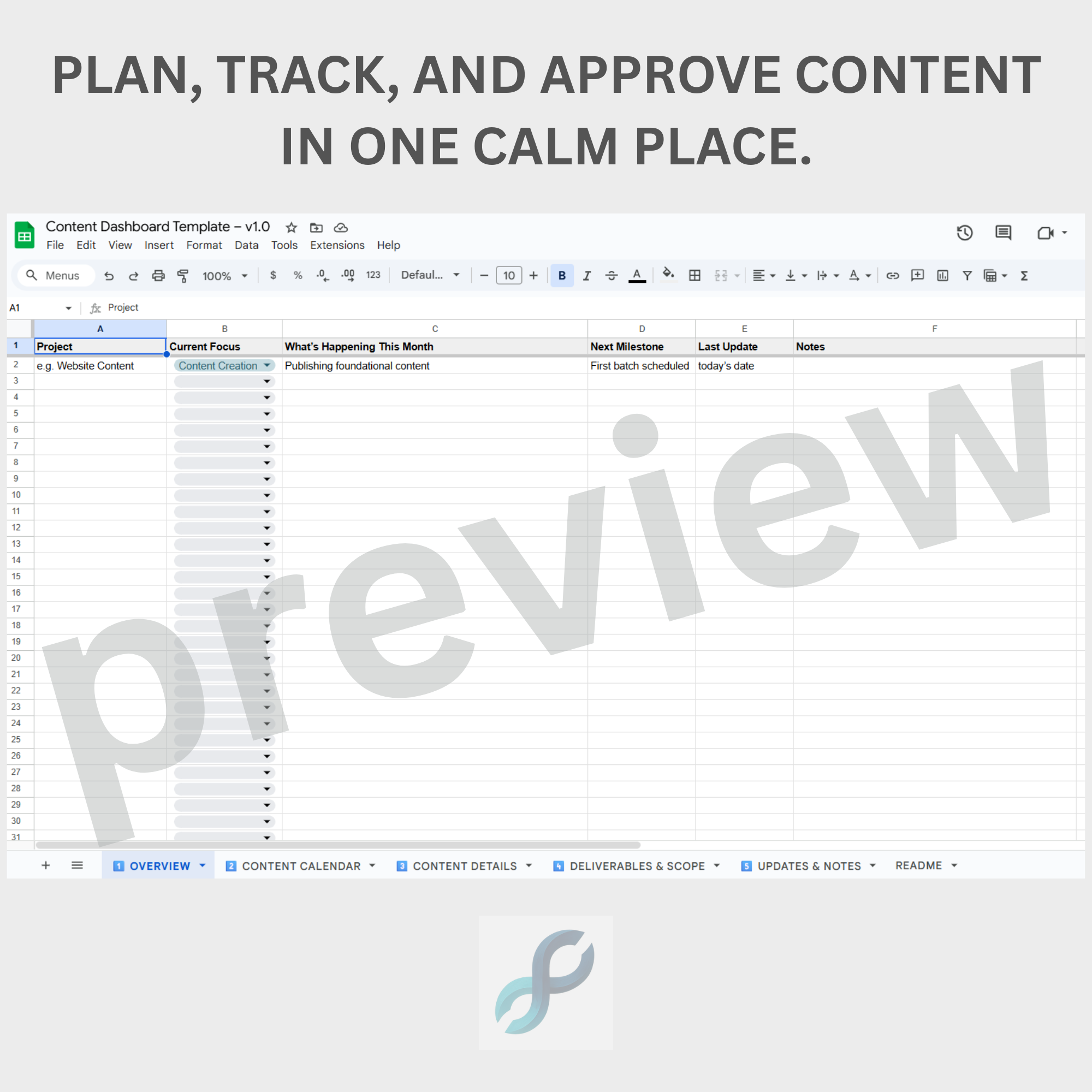
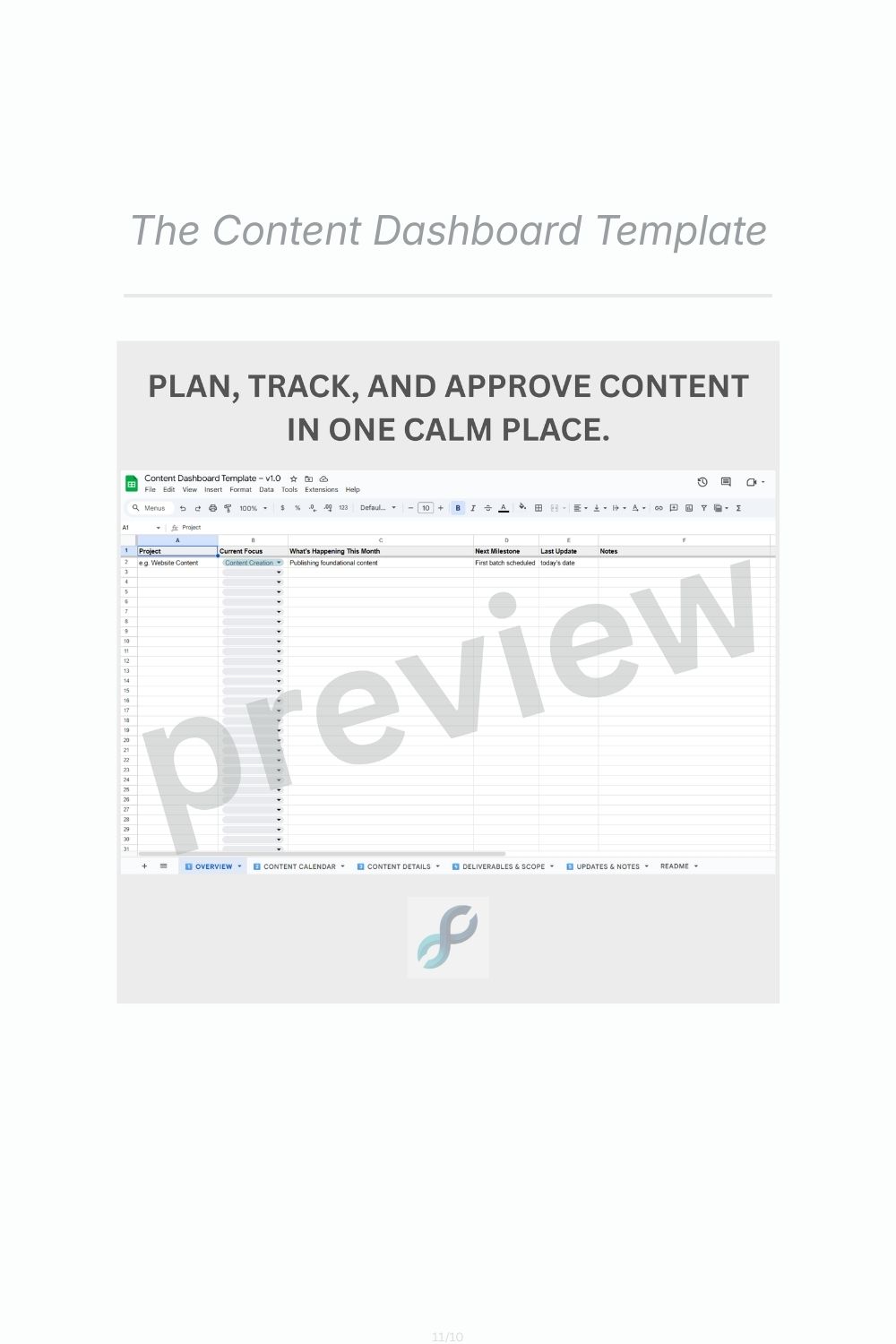
    Content Dashboard Template 2

    It helps keep content calendars, approvals, and deliverables visible in one place without becoming a system to manage.

    There is no automation, no analytics, and no required way to use it — just structure when it’s helpful.

    We have made a copy of this dashboard available for those who prefer a DIY option.

    It’s a simple place to collect thoughts without needing to decide what they are yet.

    Notes can stay loose, unfinished, or purely observational until they’re ready to become something else.

    This helps keep creative thinking separate from planning and delivery, which makes both feel lighter.

    None of these are meant to be comprehensive or prescriptive. They are simply tools we have found useful for keeping content work steady and sustainable.

    If a tool starts to feel like something you need to manage, it is usually a sign it is doing too much.

    The Content Dashboard Template

    Simple tools, used lightly, tend to last the longest.

  • Why Most Content Fails Before It’s Even Written

    Why Most Content Fails Before It’s Even Written

    Why Most Content Fails Before It’s Even Written Blog Post

    Most content doesn’t fail because the writing is bad.

    It doesn’t fail because of weak headlines,

    poor SEO,

    or inconsistent posting.

    It fails before a single word is written.

    That might sound uncomfortable—but it’s also incredibly freeing. Because if the real problem isn’t your

    writing skill or your work ethic, then the solution isn’t more hustle. It’s clearer thinking.

    And that changes everything.


    The Invisible Failure Point No One Talks About

    By the time content “fails,” most creators are already exhausted.

    They’ve researched keywords.

    They’ve drafted, edited, scheduled, posted.

    They’ve done everything they were told to do.

    And still—nothing moves.

    No traction.

    No clarity.

    No sense that the work is actually doing anything.

    That’s because the most common failure point in content creation happens upstream—before drafting,

    before publishing, before metrics ever enter the picture.

    Content fails when it’s created without a decision.


    Activity Isn’t Direction

    Most creators are not inactive.

    They’re overactive.

    Publishing regularly.

    Trying new formats.

    Following best practices.

    Reacting to advice.

    But activity without direction doesn’t compound—it scatters.

    When content is created without answering a few fundamental questions, it becomes

    indistinguishable noise:

    • What is this content for?
    • What decision does it support?
    • What should be clearer after someone consumes it?
    • What changes because this exists?

    If you can’t answer those questions, the content isn’t wrong—but it is unanchored.

    And unanchored content drifts.


    Why “More Content” Never Fixes the Problem

    When results stall, the default advice is always the same:

    Publish more

    Be more consistent

    Try harder

    But volume only amplifies what’s already there.

    If your direction is unclear, publishing more content doesn’t fix it—it just makes the confusion louder.

    This is why so many creators feel like they’re constantly “starting over,” chasing momentum that never

    quite sticks.

    The issue isn’t effort.

    It’s that the thinking hasn’t been done once, clearly, and carried forward.


    The Difference Between Writing and Deciding

    Writing is execution.

    Deciding is strategy.

    Most tools help you write faster.

    Very few help you decide what deserves to be written at all.

    That gap is where content quietly fails.

    Because content that works—content that compounds—comes from a clear decision made before the draft begins:

    • This is who this is for.
    • This is the role it plays.
    • This is how it fits into the larger body of work.
    • This is what success actually looks like.

    When those decisions are made upfront, writing becomes lighter. Faster. More confident.

    Not because it’s easier—but because it’s grounded.


    Why Clarity Feels So Rare (and So Relieving)

    Creators are rarely taught to pause before creating.

    The pressure is always forward:

    post → publish → promote → repeat.

    But clarity doesn’t come from motion.

    It comes from orientation.

    The moment you know why something exists, what it connects to, and what it’s meant to do, the noise

    drops away. You stop second-guessing. You stop chasing trends. You stop rewriting the same ideas in

    different outfits.

    You don’t need motivation.

    You need alignment.


    This Is Where Content Should Actually Begin

    Content shouldn’t begin with a blank page.

    It should begin with a clear decision.

    That decision is what gives the work weight.

    It’s what allows content to build on itself instead of collapsing into isolated pieces.

    This is the thinking most creators never have time to do—and the thinking that makes everything else

    feel heavy when it’s missing.

    Postilytic exists to carry that thinking.

    Not to generate content.

    Not to optimize for vanity metrics.

    But to help creators stop guessing, stop spinning, and start creating from… grounded direction.

    Because when the thinking is done once—and done well—the writing finally gets to be what it was always meant to be.

    Clear.

    Intentional.

    And worth the effort it takes to create.

Logged in: NO
User: none