Many creators begin their journey with enthusiasm and ideas.
But over time, something unexpected happens.
Content begins to feel scattered.
Ideas exist everywhere – in notebooks, draft folders, unfinished posts…
Yet turning those ideas into a clear body of work can often become difficult.
What many creators lack is not creativity.
What they lack is a content map.
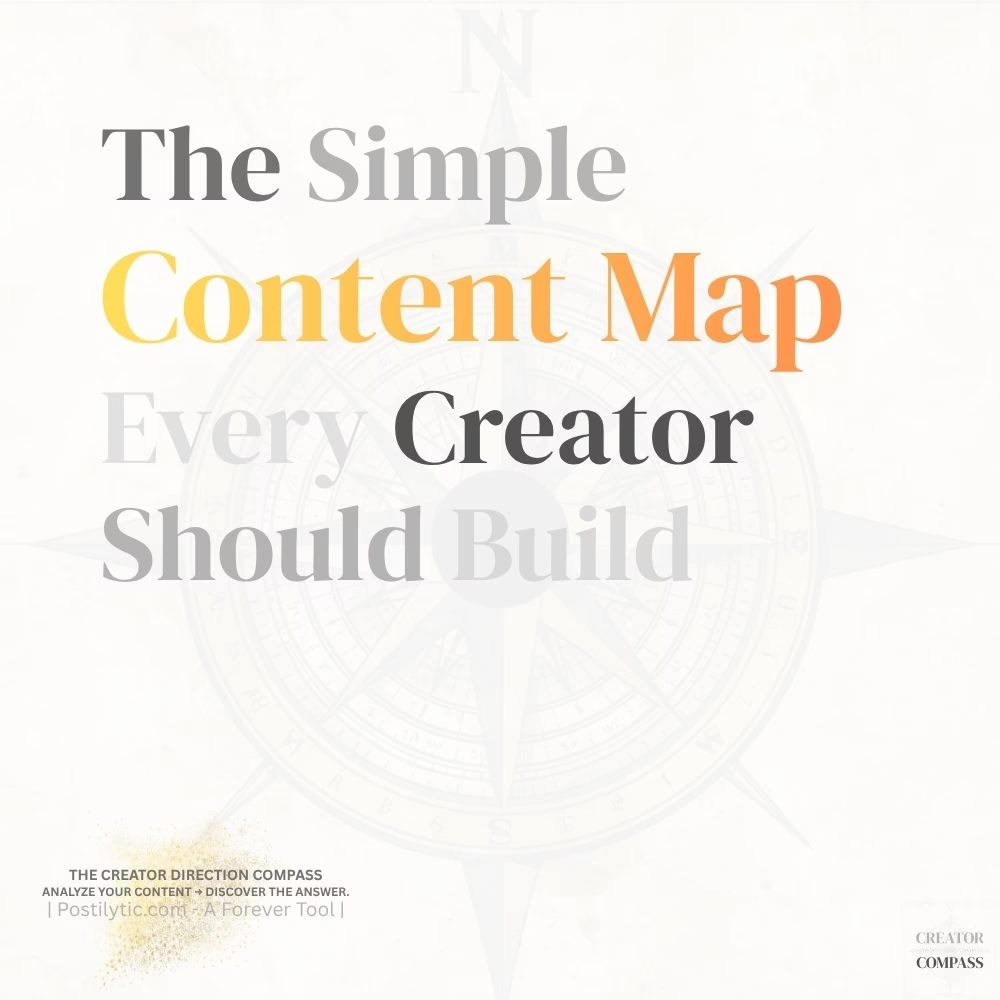
A content map provides a simple structure that helps creators transform ideas into meaningful, connected content.
Why Creators Need a Content Map
Without a map, content creation often becomes reactive.
Creators publish whatever idea feels interesting in the moment.
While this approach can work for a while, it eventually leads to a disconnected collection of posts that feel totally unrelated.
A content map introduces clarity by organizing ideas into a simple structure.
Instead of asking “What should I create next?”
Creators begin asking:
🧭
“Where does this idea fit within my map?”
The Four Layers of a Content Map
A useful content map often contains four simple layers.
- Ideas
- Content pieces
- Experiments
- Reflection
Each layer plays a role in helping creators turn inspiration into improvement.
Ideas
Every creator generates more ideas than they can realistically publish.
A content map begins by capturing these ideas in one place.
Ideas can include article concepts, video topics, tutorials, frameworks, or experiments.
The goal is not perfection — it is simply capturing the creative spark before it disappears.
Content Pieces
The next step involves transforming selected ideas into actual content.
These pieces form the visible body of work that audiences encounter.
Over time, these pieces begin connecting to each other, forming themes and clusters that help audiences explore deeper into the creator’s knowledge.
Experiments
Not every idea will succeed.
Experiments allow creators to test different topics, formats, and approaches without expecting perfection.
✨Some experiments will resonate strongly. Others will quietly fade away.
✨Both outcomes are valuable✨ because they reveal what works.
Reflection
The final layer — and the one most creators overlook — is reflection.
After publishing content, creators can examine patterns.
- Which topics generated interest?
- Which posts solved meaningful problems?
- Which ideas deserve further exploration?
Reflection transforms isolated pieces of content into lessons that guide future creation.
Mapping Content Over Time
A content map does not need to be complicated…
Even a simple framework can help creators organize their ideas and build content that grows in value over time.
As more content appears within the map, connections become clearer.
Those connections help creators move from scattered publishing to intentional creation.
Moving Forward…
Creators who use content maps often discover that their work becomes easier to manage and more meaningful to their audience.
Instead of constantly searching for new ideas, they begin expanding the knowledge they have already started building.
And over time,
Their content evolves into a connected ecosystem that continues to grow.
🧭
Part of the Creator Compass
This guide is part of the Creator Compass system, a collection of resources designed to help creators build stronger content direction.
👉 View the Creator Compass Hub